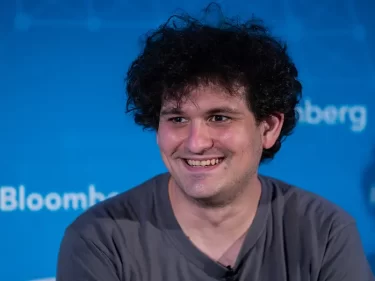
Nick Szabo Net Worth 2026: The Man Who May Have Invented Bitcoin
 by Ashish Arora
Who is Nick Szabo?
In the world of cryptocurrency, few figures are as mysterious, as brilliant, or as consequential as Nick Szabo.
A computer scientist, cryptographer, and legal scholar, Szabo is the man who:
- Invented the concept of Smart Contracts in 1994 — the technology that powers Ethereum and the entire DeFi ecosystem
- Designed Bit Gold in 1998 — a decentralized digital currency so similar to Bitcoin that many experts believe it was Bitcoin’s direct blueprint
- Is widely considered the most likely candidate to be Satoshi Nakamoto — the anonymous creator of Bitcoin
If Szabo is indeed Satoshi Nakamoto, his net worth would not be $5 million — it would be over $80 billion.
So what exactly is Nick Szabo’s net worth in 2026? Who is this enigmatic figure? And is he really Satoshi Nakamoto?
Let us find out.
Nick Szabo Net Worth 2026
Nick Szabo’s estimated net worth in 2026 is between $2 million and $5 million — based on his career as a computer scientist, researcher, and his involvement with JAN3, a Bitcoin-focused company.
However, this figure comes with an enormous caveat:
If Nick Szabo is Satoshi Nakamoto, his true net worth could be over $80 billion — based on the approximately 1 million BTC that Satoshi’s wallets are believed to hold, at current Bitcoin prices.
| Scenario | Estimated Net Worth 2026 |
|---|---|
| As Nick Szabo (known career) | $2–5 million |
| If he is Satoshi Nakamoto | $80+ billion |
Szabo has consistently and repeatedly denied being Satoshi Nakamoto. But the circumstantial evidence pointing to him is, to put it mildly, extraordinary.
Early Life and Education
Nick Szabo was born on April 5, 1956 (some sources cite 1964 — the exact year remains disputed), in the United States, to parents of Hungarian origin.
From an early age, Szabo showed exceptional aptitude for mathematics, logic, and computer science — subjects that would define his life’s work.
He earned his Bachelor’s degree in Computer Science from the University of Washington in 1989 — one of America’s top computer science programs.
But Szabo’s intellectual ambitions did not stop at computer science. In a combination that would prove uniquely powerful, he also earned a Juris Doctor (JD) from George Washington University Law School.
This rare combination of deep expertise in both computer science and law gave Szabo a perspective that no one else in the world had — and directly led to his most important contribution: the concept of Smart Contracts.
Smart Contracts — The Invention That Changed Everything
In 1994, Nick Szabo published a paper that would change the course of financial history.
The paper introduced the concept of Smart Contracts — defined as:
“A computerized transaction protocol that executes the terms of a contract automatically.”
In simple terms: instead of needing lawyers, banks, or courts to enforce agreements, a smart contract is a piece of code that automatically executes when predetermined conditions are met — with no human intervention required.
In 1994, this was a revolutionary idea. The internet was barely a thing. Blockchain did not exist. Yet Szabo had already imagined a future where financial agreements could be automated, trustless, and unstoppable.
Two decades later, Ethereum — the world’s second-largest cryptocurrency — was built almost entirely on Szabo’s smart contract concept. The entire DeFi (Decentralized Finance) ecosystem, worth hundreds of billions of dollars, runs on smart contracts.
Ethereum’s creator Vitalik Buterin has acknowledged Szabo’s foundational influence. Elon Musk has stated publicly that Szabo’s ideas were crucial in the evolution of cryptocurrency.
Even the smallest unit of computation on Ethereum is named “gas” — a concept directly inspired by Szabo’s early writings.
Bit Gold — The Blueprint for Bitcoin
In 1998, a full decade before Bitcoin was released, Nick Szabo published a proposal for a decentralized digital currency called Bit Gold.
The similarities between Bit Gold and Bitcoin are so striking that many researchers, journalists, and cryptographers have concluded that Bit Gold was the direct precursor — and possibly blueprint — for Bitcoin.
Here is a direct comparison:
| Feature | Bit Gold (1998) | Bitcoin (2009) |
|---|---|---|
| Decentralized | ✅ Yes | ✅ Yes |
| Proof of Work mining | ✅ Yes | ✅ Yes |
| Cryptographic chain of blocks | ✅ Yes | ✅ Yes |
| Time-stamped records | ✅ Yes | ✅ Yes |
| No central authority | ✅ Yes | ✅ Yes |
| Fixed supply | ✅ Yes | ✅ Yes |
| Creator’s identity | Known (Szabo) | Unknown (Satoshi) |
The conceptual overlap is so complete that Bit Gold is widely described as Bitcoin’s direct predecessor — and the question of whether Satoshi Nakamoto simply implemented Szabo’s design has never been fully resolved.
Is Nick Szabo Satoshi Nakamoto?
This is the most important — and most fascinating — question in all of cryptocurrency.
The case FOR Szabo being Satoshi:
1. Stylometric analysis In 2014, researchers at Aston University conducted a detailed stylometric analysis — comparing writing styles — between the Bitcoin whitepaper and various suspected Satoshi candidates. Nick Szabo’s writing was found to be the closest match to Satoshi’s by a significant margin.
2. Bit Gold = Bitcoin blueprint The technical similarity between Bit Gold and Bitcoin is too precise to be coincidental. Szabo spent years developing the exact conceptual framework that Bitcoin later implemented.
3. Timing Szabo published his final Bit Gold blog post in December 2008 — the same month the Bitcoin whitepaper was published. He then went mysteriously quiet on the topic.
4. The “we” slip In a blog post about Bitcoin in 2009, Szabo wrote “we” when describing the design of Bitcoin — before quickly correcting it to “I.” This slip was noticed and widely discussed in crypto circles.
5. Elon Musk’s statement In 2017, Elon Musk publicly stated he believed Nick Szabo was probably behind Bitcoin — though he later walked back this statement.
6. The New York Times investigation In 2014, a New York Times investigation highlighted Szabo as the strongest candidate for Satoshi — describing his work as the most direct intellectual precursor to Bitcoin.
The case AGAINST:
- Szabo has consistently and clearly denied being Satoshi
- His Bitcoin address holdings (if any) have never been identified
- Craig Wright and others have made competing (and largely discredited) claims
- Satoshi’s writing style, while similar, is not a definitive match
The truth remains unknown. But among serious researchers, Nick Szabo remains the most credible candidate for Satoshi Nakamoto.
Career Timeline
| Year | Milestone |
|---|---|
| 1989 | Graduated University of Washington — Computer Science |
| 1994 | Published “Smart Contracts” — foundational paper |
| 1995 | Published “Secure Property Titles with Owner Authority” |
| 1998 | Proposed Bit Gold — direct Bitcoin precursor |
| 2002 | Published “The Origins of Money” — influential economic essay |
| 2005 | Published “Bit Gold” formally on his blog |
| 2008 | Bitcoin whitepaper published (by Satoshi Nakamoto) |
| 2009 | Bitcoin network launched |
| 2014 | NYT investigation names him top Satoshi candidate |
| 2020s | Joins JAN3 — a Bitcoin-focused company |
| 2026 | Continues research and speaking engagements |
Nick Szabo’s Work at JAN3
In recent years, Szabo has been associated with JAN3 — a company focused on Bitcoin adoption and Bitcoin-related infrastructure, led by Samson Mow — one of Bitcoin’s most prominent advocates.
Szabo’s involvement with JAN3 represents one of the few confirmed income sources in his recent career. He contributes his expertise in cryptography, digital contracts, and monetary theory to the company’s work on Bitcoin nation-state adoption.
The “Godfather of Smart Contracts” Legacy
Regardless of whether Szabo is Satoshi Nakamoto, his legacy in the world of technology and finance is extraordinary.
Consider the scale of what his ideas created:
| Szabo’s Concept | What It Became | Current Value |
|---|---|---|
| Smart Contracts | Ethereum ecosystem | $200B+ market cap |
| Smart Contracts | DeFi total value locked | $80B+ |
| Smart Contracts | NFT market | Billions |
| Bit Gold | Bitcoin (if Satoshi) | $1.5 trillion+ market cap |
Even in the conservative scenario where Szabo is simply the intellectual father of smart contracts — and not Satoshi — his ideas have directly enabled the creation of trillions of dollars in value.
Nick Szabo’s Income Sources
Given his deliberately private lifestyle, Szabo’s income sources are difficult to confirm. Based on available information:
| Source | Details |
|---|---|
| JAN3 | Ongoing role — salary/compensation |
| Academic research | Papers, lectures, academic recognition |
| Speaking engagements | Crypto conferences — one of the most sought-after speakers |
| Honorary professorship | Universidad Francisco Marroquín |
| Crypto investments | Unconfirmed — details private |
| Satoshi holdings | If Satoshi — ~1 million BTC (~$80B+) |
Personal Life — The Most Private Man in Crypto
Nick Szabo is, by a significant margin, the most private major figure in the cryptocurrency world.
Almost nothing is known about his personal life. He is believed to be married, but his spouse’s name has never been publicly disclosed. He has no confirmed children. He lives somewhere in the United States but has never publicly confirmed his location.
He maintains minimal social media presence — occasional posts on X (formerly Twitter) on topics of cryptography, monetary theory, and Bitcoin.
His Hungarian heritage gives him a connection to Central Europe’s rich tradition of mathematical and scientific excellence — a tradition that produced figures like John von Neumann and Edward Teller.
In recognition of his contributions to the field of cryptography and digital contracts, Szabo was awarded an honorary professorship from Universidad Francisco Marroquín — a Guatemalan university known for its commitment to free-market economics and classical liberal thought.
Nick Szabo’s Philosophy — Money, Contracts, and Trust
One of the most underappreciated aspects of Szabo’s contribution is his deep philosophical thinking about money, contracts, and trust.
His essays — including “Shelling Out: The Origins of Money” (2002) and “The God Protocols” (1997) — reveal a thinker who approached cryptocurrency not just as a technical problem but as a fundamental question about human civilization.
“Shelling Out” traces the origins of money through evolutionary history — arguing that humans have always needed trusted, portable stores of value to facilitate cooperation. Bitcoin, in Szabo’s framework, is simply the most advanced form of this ancient human need.
“The God Protocols” imagined a perfect trusted third party — a theoretical entity that could execute agreements with absolute fairness. Smart contracts, he argued, were the closest practical approximation of this ideal.
These philosophical foundations give Bitcoin and smart contracts a depth that goes far beyond mere technology — and they explain why Szabo is considered not just a computer scientist but one of the most important thinkers in monetary history.
Nick Szabo vs Other Crypto Pioneers — Net Worth 2026
| Person | Contribution | Net Worth 2026 |
|---|---|---|
| Nick Szabo | Smart Contracts, Bit Gold | $2–5M (or $80B+ if Satoshi) |
| Vitalik Buterin | Ethereum | ~$467M–750M |
| Gavin Andresen | Bitcoin Core | ~$100–105M |
| CZ | Binance | $50–110B |
| Michael Saylor | Strategy/BTC | ~$4.7B |
FAQs — Nick Szabo Net Worth 2026
What is Nick Szabo’s net worth in 2026?
Nick Szabo’s estimated net worth in 2026 is between $2 million and $5 million based on his known career. However, if he is Satoshi Nakamoto, his true net worth could exceed $80 billion.
Did Nick Szabo invent Bitcoin?
Szabo invented Bit Gold — widely considered Bitcoin’s direct precursor — and the concept of smart contracts. He has consistently denied being Satoshi Nakamoto, Bitcoin’s creator.
Is Nick Szabo Satoshi Nakamoto?
Szabo is the most widely cited candidate for Satoshi Nakamoto based on stylometric analysis, the similarity between Bit Gold and Bitcoin, and circumstantial timing. He has denied it. The truth remains unknown.
What is Bit Gold?
Bit Gold was a decentralized digital currency proposed by Szabo in 1998 — 11 years before Bitcoin. It used proof-of-work mining, cryptographic chains, and had no central authority — essentially the same design as Bitcoin.
What are smart contracts?
Smart contracts are self-executing agreements written in code — a concept Szabo introduced in 1994. They are the foundational technology of Ethereum and the entire DeFi ecosystem.
What is Nick Szabo doing in 2026?
Szabo is involved with JAN3 — a Bitcoin-focused company — and continues occasional research, writing, and speaking on topics of cryptography and monetary theory.
How old is Nick Szabo?
Nick Szabo was born on April 5, 1956 (or 1964 — sources vary), making him approximately 62–70 years old in 2026.
What university did Nick Szabo attend?
Szabo holds a Computer Science degree from the University of Washington (1989) and a Juris Doctor from George Washington University Law School.
Conclusion
Nick Szabo is, without question, one of the most important figures in the history of cryptocurrency — and possibly the most important of all.
His invention of smart contracts laid the intellectual foundation for Ethereum and the entire DeFi ecosystem. His design of Bit Gold created the conceptual blueprint for Bitcoin. And his deep philosophical thinking about money, trust, and contracts gave the entire crypto movement an intellectual depth it might never have achieved without him.
His estimated net worth of $2–5 million in 2026 is almost certainly a dramatic underestimate of his true financial position — either because he holds undisclosed crypto investments, or because he is Satoshi Nakamoto and holds approximately 1 million BTC worth over $80 billion.
The mystery of Nick Szabo — the man who may have invented Bitcoin, the man who definitely invented smart contracts, and the man who remains the most private and enigmatic figure in all of cryptocurrency — is one that may never be fully resolved.
And perhaps that is exactly the way he wants it.
Disclaimer: Net worth estimates are based on publicly available information. The question of whether Nick Szabo is Satoshi Nakamoto has never been definitively proven or disproven. This article is for informational purposes only.